
Designing a cabbage processing line for commercial production requires careful planning of equipment configuration, processing capacity, factory layout, and production workflow. A well-designed system can help food manufacturers handle large quantities of fresh cabbage efficiently while maintaining consistent product quality and hygienic processing conditions.
Whether you are building a new vegetable processing plant or upgrading an existing facility, the right cabbage processing line should be designed around your final products, production targets, and available space. Proper planning can also reduce unnecessary labor, minimize material handling, and improve long-term operating efficiency.
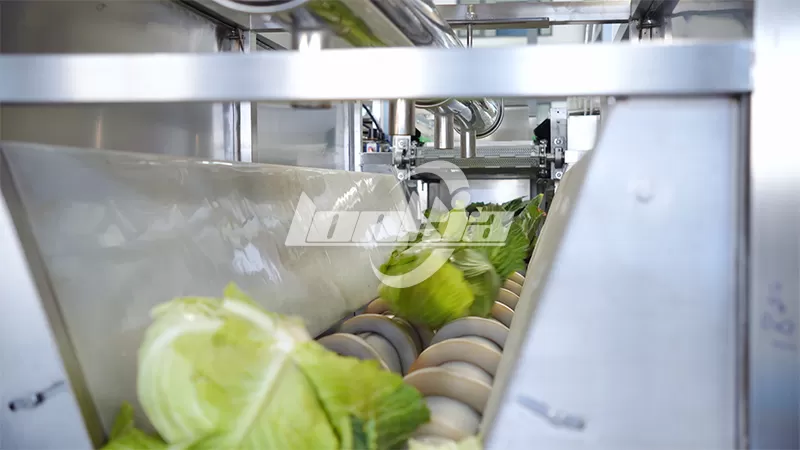
Determine Your Production Requirements
The first step in designing a commercial cabbage processing line is identifying your actual production requirements.
Consider the following factors:
Required processing capacity per hour
Daily production volume
Type of cabbage products
Required cutting size and shape
Washing and dewatering requirements
Packaging specifications
Expected future production growth
For example, a factory producing shredded cabbage for supermarkets may require a different equipment configuration from a facility processing cabbage for fermented food production.
Defining these requirements early helps determine the appropriate machines and production line capacity.
Design the Complete Cabbage Processing Flow
A commercial cabbage processing line should follow a logical sequence to ensure smooth material movement between different stages.
A typical processing flow includes:
Raw Cabbage Feeding → Trimming → Cutting or Shredding → Washing → Dewatering → Inspection → Weighing → Packaging
Each stage should connect efficiently with the next. The processing speed of individual machines must also be coordinated to prevent bottlenecks.
The actual production flow can be adjusted according to the final product and processing requirements.
Select the Right Cabbage Processing Equipment
Equipment selection directly affects production capacity, processing quality, and operating costs.
A commercial cabbage processing line may include the following machines:
1. Cabbage Feeding and Conveying Equipment
Feeding equipment transfers fresh cabbage into the production line. Conveyors connect different processing stages and help maintain continuous material flow.
2. Cabbage Trimming Equipment
Trimming equipment removes unwanted outer leaves, roots, and damaged portions before further processing. This stage helps prepare raw cabbage for cutting and washing.
3. Industrial Cabbage Cutting Machine
Cutting equipment processes cabbage into slices, strips, or smaller pieces according to product specifications. The machine should provide consistent cutting results while matching the required production capacity.
4. Commercial Vegetable Washing Machine
Industrial washing equipment removes soil, plant debris, and other surface contaminants. The washing system should be selected according to the cabbage product, processing volume, and cleaning requirements.
5. Dewatering Equipment
After washing, dewatering equipment removes excess surface water before further processing or packaging. Centrifugal dewatering or air-drying systems can be considered depending on the final product.
6. Inspection and Packaging Equipment
Inspection conveyors allow operators to check product quality before packaging. Weighing and packaging machines can be integrated to complete the production process.
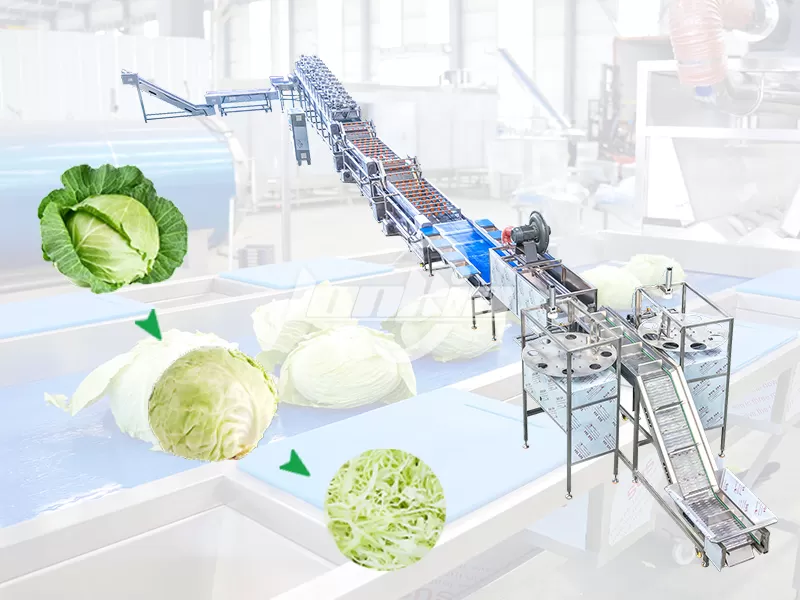
Plan the Cabbage Processing Plant Layout
Factory layout is an important part of commercial production line design.
A practical layout should provide sufficient space for equipment installation, material transportation, operation, cleaning, and maintenance.
Important considerations include:
Raw material receiving and storage areas
Processing equipment arrangement
Finished product handling areas
Personnel access and working space
Cleaning and drainage facilities
Maintenance access
Packaging and finished product storage
A straight-line layout is suitable for many facilities, while an L-shaped or U-shaped configuration may be more practical when factory space is limited.
The final arrangement should minimize unnecessary material movement and maintain a logical separation between raw materials and finished products.
Calculate the Required Production Capacity
Production capacity should be planned according to daily output targets and available working hours.
For example, if a factory needs to process 10 tons of cabbage during an 8-hour shift, the required average throughput is approximately 1.25 tons per hour.
However, equipment should not be selected based only on this average. Buyers should also consider loading fluctuations, cleaning time, maintenance downtime, and differences in machine processing speeds.
The capacity of each processing stage should be properly matched to maintain continuous production.
Choose the Right Level of Automation
Automation can improve production efficiency and reduce repetitive manual work.
A semi-automatic cabbage processing line may be suitable for smaller facilities or businesses with limited investment budgets.
For larger commercial operations, a fully automatic system can integrate feeding, conveying, cutting, washing, dewatering, and packaging equipment.
The appropriate automation level depends on production volume, labor availability, operating costs, and investment plans.
Consider Hygiene and Maintenance Requirements
Food hygiene should be considered from the beginning of the equipment design process.
Commercial cabbage processing equipment commonly uses stainless steel in food-contact areas. Equipment should also have accessible surfaces, convenient drainage, and structures that allow regular cleaning.
In addition, the production line should provide sufficient space for maintenance and inspection.
A hygienic and maintainable design helps reduce cleaning difficulties and supports stable long-term operation.
How Much Does a Commercial Cabbage Processing Line Cost?
The investment required for a commercial cabbage processing line depends on processing capacity, equipment configuration, automation level, and factory layout.
A basic system with feeding, cutting, and washing equipment will generally cost less than a complete automatic line with dewatering, inspection, conveying, and packaging systems.
Customization, installation requirements, control systems, and supporting equipment can also affect the total investment.
For an accurate quotation, provide the manufacturer with your target capacity, final product specifications, processing requirements, and available installation space.
Why Choose LONKIA Machinery?
LONKIA Machinery provides food processing machinery and customized production line solutions for commercial food manufacturers.
Cabbage processing lines can be configured according to production capacity, final product specifications, automation requirements, and factory layout. Depending on the project, the system can integrate feeding, cutting, washing, dewatering, conveying, inspection, and packaging equipment.
By considering the complete production process, LONKIA Machinery helps customers develop practical equipment configurations for their commercial cabbage processing operations.
Conclusion
Designing a cabbage processing line for commercial production involves more than selecting individual machines. Production capacity, processing flow, equipment configuration, factory layout, automation, and hygiene requirements must all work together.
A properly designed cabbage processing line can improve production efficiency, reduce manual handling, and maintain consistent product quality. Working with an experienced food processing machinery manufacturer can help ensure that the final solution matches your current production needs and future business plans.