
The potato processing industry is becoming increasingly competitive, and businesses are looking for ways to improve productivity while maintaining consistent product quality. A potato sorting and grading line provides an efficient solution by automating the process of separating potatoes according to size, quality, and production requirements.
Compared with manual sorting, an automated grading system can significantly increase processing speed, reduce labor costs, minimize product waste, and help potato suppliers meet the demands of supermarkets, food manufacturers, and processing plants.
What Is a Potato Sorting and Grading Line?
A potato sorting and grading line is an automated system designed to classify potatoes based on different criteria, such as size, weight, and quality.
A complete line may include:
potato receiving hopper
feeding conveyor
sorting equipment
grading machine
inspection conveyor
weighing and packing system
By integrating multiple processes into one production system, potato processors can achieve faster and more consistent results.
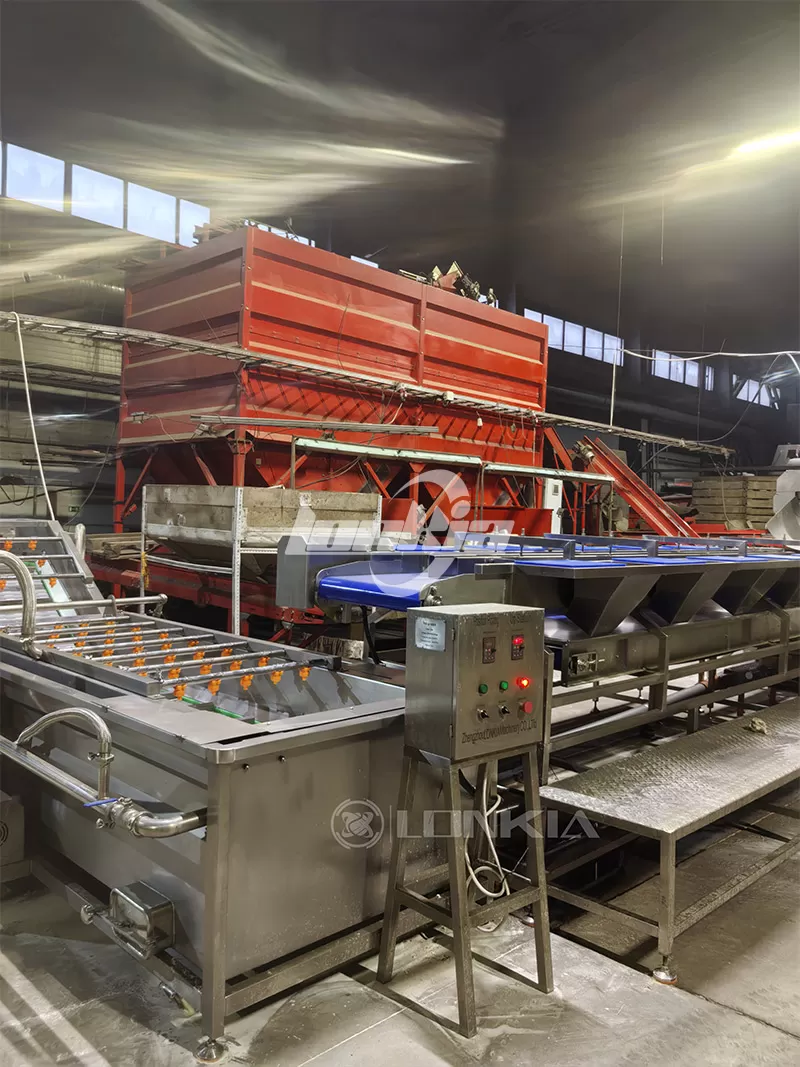
Increase Processing Speed and Production Capacity
One of the biggest advantages of a potato sorting and grading line is improved processing efficiency.
Manual sorting requires many workers and takes more time, especially when handling large volumes of potatoes. An automatic grading line can continuously process thousands of kilograms of potatoes per hour, helping factories maintain stable production.
Benefits include:
higher processing capacity
continuous operation
fewer production delays
improved workflow efficiency
For large potato processing plants, automation is essential for meeting high-volume production demands.
Improve Grading Accuracy and Product Consistency
Consistent potato sizes are important for both fresh markets and processed products.
A potato grading line can accurately separate potatoes into different categories, ensuring:
uniform product sizes
better packaging quality
improved customer satisfaction
reduced sorting errors
For example, potato chip and French fry manufacturers require potatoes with specific size ranges to achieve consistent cutting and frying results.
Reduce Labor Costs
Traditional manual sorting requires a large workforce and can be affected by worker experience and fatigue.
An automatic potato sorting and grading line reduces dependence on manual labor by handling repetitive sorting tasks automatically.
This helps businesses:
reduce labor expenses
improve production stability
allocate workers to other important tasks
For companies facing increasing labor costs, automation provides a practical long-term solution.
Minimize Potato Damage and Waste
Potatoes can easily suffer bruising or damage during handling. Poor handling not only reduces product value but also increases waste.
Modern grading lines are designed with gentle conveying systems, including:
smooth transfer points
adjustable conveyor speeds
protective contact surfaces
These features help maintain potato quality throughout the sorting process.
Optimize Space and Production Flow
A well-designed potato sorting and grading line improves factory organization by combining multiple processing steps into one system.
Instead of moving potatoes between separate machines manually, an integrated line creates a smoother workflow from receiving to final packing.
This helps:
reduce material handling time
save factory space
improve overall production management
Support Different Potato Processing Applications
A flexible grading line can be used for various potato applications, including:
fresh potato packaging
French fry production
potato chip manufacturing
seed potato grading
Different grading settings allow processors to adjust the system according to market requirements.
Improve Long-Term Operating Efficiency
Although an automatic potato sorting and grading line requires an initial investment, it can provide significant long-term benefits.
Advantages include:
lower labor costs
higher productivity
reduced product loss
improved product quality
easier production management
For businesses processing large quantities of potatoes, the return on investment can be significant.
How to Choose the Right Potato Sorting and Grading Line?
Before purchasing equipment, businesses should consider several factors:
Production Capacity
Choose a machine that matches your required output, whether you process a few tons per hour or operate a large industrial facility.
Grading Requirements
Determine whether you need:
size grading only
weight grading
quality inspection
optical sorting
Automation Level
Select the right level of automation based on your production scale and budget.
Future Expansion
A modular system allows you to add equipment such as washing machines, packaging systems, or additional grading units in the future.
Why Choose LONKIA Machinery?
LONKIA Machinery provides customized potato processing solutions for farms, packing companies, and industrial food manufacturers worldwide.
Our potato sorting and grading lines are designed to deliver:
reliable grading performance
efficient production capacity
durable food-grade construction
customized solutions for different applications
professional technical support
Whether you need a standalone grading machine or a complete potato processing line, LONKIA Machinery can help design the right solution for your business.
Conclusion
A potato sorting and grading line improves processing efficiency by increasing production speed, improving grading accuracy, reducing labor costs, and minimizing product waste.
For modern potato processing plants, investing in an automated grading solution is an effective way to improve productivity and maintain consistent product quality. Choosing the right equipment and working with an experienced manufacturer can help businesses achieve more efficient and profitable potato processing operations.